
You can still the catch the film and Takashi Miike if you hurry!!!
YAKUZA APOCALYPSE FINAL SCREENING:
Sat, Sept 19, 3:00 PM SCOTIABANK


 |
| Tony Jaa and Wu Jing throw down. |
已經係一個好完整的故事,無需要延續,如果拍SPL2的話,我同監製都決定重新開展一個故事,當然要保留一點SPL的感覺,我地選擇左保留他的宿命,他的命運這個主題,重新創作所有人物,係一個屬於的自己版本的SPL,今次我們有很多地方的演員,有泰國,香港,要將2個地方係一個主題下拉埋一齊好似幾好,我同監製決定用命運將2個地方的演員結合在故事中
At first, I told him that I wouldn't want to make an SPL movie unless we had a feasible story. And somehow we managed to put together all the characters and the story framework that you see in the current movie.
 |
| Tony Jaa and Unda Kunteera Yhordchanng |
其實每個地方的演員都好好,係好出色的動作片演員,當然我們會抽取每個演員特質,或我對每個演員的感覺,如Tony Jaa我不希望他演殺手,但我好希望他似他第一部作品《拳霸》中,單純直接的性格,另外吳京我希望他成為一個未見過的吳京,他以前經常很威風打人的,今次在命運的谷底裡慢慢掙扎上去,今次每個演員我都盡量有一點不同和鮮明的風格放在他們身上,希望每個人都特出
In fact, they are all good action movie actors. We were grounded in the characteristics of each actor or how I feel about each actor. For example, I don’t want Tony Jaa be a killer. I would like him to be a simple and headlong man, just like in Ong-Bak. Besides, I want the audience can see the other side of Wu Jing. He is always power and prestige in the past. This time, I want him down in the dumps and struggling. This time, I have tried a different and distinctive style on every actor, I hoped everyone could be outstanding.
 |
| Wu Jing, struggling. (Simon Yam in peril) |
一開始我們討論每一場戲的動作和我的要求,當然我們在現場會作出很多修改,有些想法一起創造,有一些場口是我決定氣氛,李忠志在我給我框框下發揮
We started to discuss the operation of each scene and my demands. We have made many adjustments on site. There were some ideas we created together. And there are some scenes were I decided to do for atmosphere, then he developed it.
每個跟我合作過的導演對我有很大影響,因為在他們身上學到很多,好似你們提到的Wilson Yip, Ringo Lam, Johnnie To 他們都對我很大影響
Those directors that I've worked with are a great influence on me. I learned a lot from them. As you mentioned, directors like Wilson Yip, Ringo Lam, Andrew Lau and Johnnie To. They have a great influence on me.
 |
| Zhang Jin and Tony Jaa. |
拍攝時,語言上都係一個挑戰,但對於我們來說都是要克服的,我想最大的難題是張晉,因為他根本不是泰國人,他要完全講泰文的對白,對他來說是一個幾大的挑戰,我覺得他學得很快,很有語言的天份,令到拍攝很順利
Language is challenge for us during shooting. But we have to overcome it. I think there was a big challenge for Zhang Jin. Although he is not Thai, he had to speak in Thai during shooting. I think he is very talented in language. So it made the shooting very smooth.


I bought an early GoPro in Italy while snowboarding, thinking it'd be great to capture my 'skills'. Upon recording and then viewing what I've shot, I decided to never embarrass myself with it again and gave the camera to my friend Sergey Valyaev. He returned it a little later with some shots still on there of himself walking around and doing basic parkour stuff. I looked at them and thought it'd be great to do a cheap music video using the POV style, I asked Sergey to be the camera stuntman and got a bunch of friends to hang out and get 'killed' in it. The result was a 300$ POV music video for a song called "The Stampede" and it got us a few million views and some much needed attention. Then we pitched the sequel, "Bad Motherfucker," with a bigger budget to a ton of companies/brands and everyone thought it wasn't worth it, too violent, etc. I knew it was going work well so I borrowed some cash and off we went.
I was super hesitant first and foremost because an all POV film sounds like a gimmick and I thought of myself a little better than that. At the time of "Bad Motherfucker's" release, I was prepping for a very different kind of film, a slow-burn intelligent spy thriller, so an action POV film felt like a step in the wrong direction. After a few days of thinking about how I'm going to have to say no to a Director/Producer who I much admire, what changed my mind was Timur asking me if I wanted to experience a well realised action adventure POV film in the cinema, and my answer was yes, I actually really would. He said, "Then you should go make it".
The biggest blessing of being the first to do something is also it's biggest curse. There are very few, if any points of reference. Sure, there are plenty of POV based elements in entertainment, Prodigy's "Smack My Bitch up," Strange Days' amazing intro sequence, video games and that is it. Apart from a fully POV noir film from 1947 called, Lady in the Lake, which I generally used as a guide of what one shouldn't do, there is no successful example of a feature length POV film that works. This meant that most of Hardcore had to be shot by trial and error, which is luxury you really can't have.
What this meant in practice was that each morning we'd show up to set, everyone would know the script and the action beats and we would right off the bat, run through the days' shoot with a rolling camera. At that point, it was almost always a complete piece of crap. Then the actors and stuntmen would go to make up and costume, while I walked around feverishly trying to figure out how we can make it work. By the time they arrived ready, I (almost) always had a plan, realising which was a matter of sweat, blood and tears.
Apart from making a coherent and fun movie, the biggest issue with making sure that Hardcore could see the dark of the cinema was that I wanted to make sure the audience would not get motion sickness. As someone who can't even text while being a passenger in a car, this was an important area to tackle. Our first DP, Seva Kaptur (one of 3) worked with Sergey Valyaev (who shot about a third of the film as Henry) and a small group of Russian engineers to design a lightweight rig that would hold two GoPros and use magnetic stabilisation to ensure enough smoothness to be easy on the eyes but not kill the feeling of it being a human and not a steadycam. It took about 3 months to perfect and we went through about 5 different versions and finally, about two weeks into the shoot, we received the rig that was perfect for our needs.

Hardcore was at first, an 80 minute music video. That changed when I got to about page two of the script and realised how bored I am with it already. I tossed the music video idea aside and began writing a proper script (all told from the first person) and came up with a basic pitch for a character that I then asked Timur to consider getting a name actor for. He asked me who I was thinking of, and I said Sharlto Copley. He got me in touch with him and I basically pitched Sharlto the idea and said that if he's interested in being a part of this experimental adventure, I'll write a great part specifically for him and then he'd decide if he's in or not.
He agreed and all that was left was for me to come up with a part/character that Sharlto could not possibly say no to. I am very happy that this worked out the way it did, and that he is such a integral part of the movie. Hardcore has a heart and that heart is Sharlto's Jimmy.You came up with several rules to aid in the making of the film? What were some of them?
I think there were about ten in total. Here's the first three: I will never show the main character. He will never speak. The film will keep moving, even when it's in it's 'breathing' space.What kind of cinematic experience awaits the Midnight Madness audience at the world premiere?
I think what you said is perfect except I'd add the word 'new'. So, what awaits is a 'new cinematic experience'.
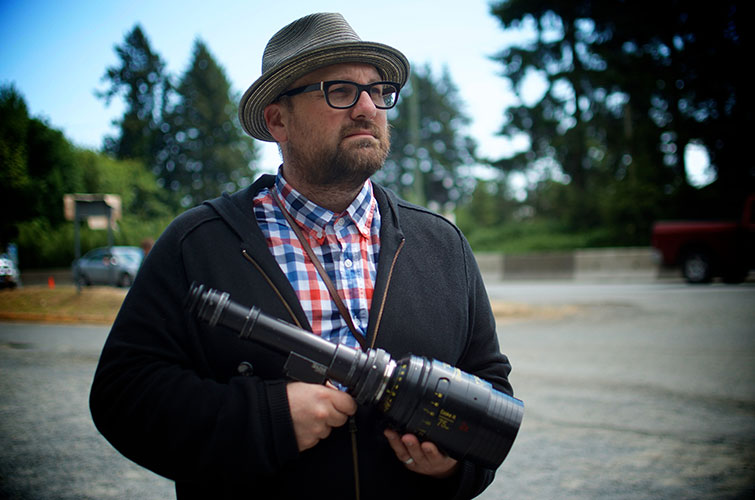
What drew me to film initially was just how big it all seemed. I was four years old when I saw Star Wars for the first time and that changed my life. It wasn’t until I saw the poster for Escape from New York that I became obsessed with film. That film was my gateway into the genre. Growing up in the 80’s and being adverse in all things sports, the cinema quickly became my church. My mother is a big fan of horror and true crime novels about serial killers. That had a huge impact on me as well. I purchased more than a few copies of Halloween and A Nightmare On Elm Street on VHS when I was a kid. The tapes kept wearing out.Where did the idea for The Girl in the Photographs come from?
Oz Perkins and I started working on The Girl In The Photographs right after we completed my first film, Removal. It was always sort of a hobby spec script that we kept going back to. We both went on to write other scripts while continuing to revisit Girl. The initial idea was to try and come up with a current story that had the same pace and feel as an 80’s horror film. It wasn’t until Wes Craven read the script and loved it when it became something I actively tried to get made.

Capturing the look and feel and tone of the picture was extremely important to me. I really wanted this picture to feel like the films I loved growing up. I wanted to be very specific about where the camera was pointed at all times, yet still give the picture a moodier look while being beautiful at the same time. Hiring the right cinematographer was essential to the process.You worked with legendary cinematographer Dean Cundey (Halloween, Jurassic Park) that must have been an incredible experience. What was it like to work with Mr. Cundey?
I’ve described working with Dean Cundey as a biblical experience. Every day in prep and on set was like a master class in cinema. When I first approached Dean to shoot the picture, I remember saying to him, “I can hire a DP and show him all of your films, or you could shoot this picture!” Luckily, he loved the script and understood what I was trying to achieve. I hope to work with Dean again. He shot some of my favorite films of all time.Wes Craven was an Executive Producer of the film. As you have said he was your mentor. Could you share something that Mr. Craven imparted on you about film making and life?
Wes was instrumental in getting this picture made. He was there every step of the way. He had some ideas on a few script tweaks, he was involved in casting, every day he would watch dailies of our principle photography and gave me weekly notes on the edit. His notes during editing were always geared towards what the audience will see and learn in each scene. He was very aware of how people watch horror films. Wes is a master filmmaker and having that kind of feedback was invaluable. He is one of the reasons that I am making film and his work has been such a huge influence on me. This film is for Wes. I’m happy that he wasn’t disappointed and loved the picture in the end.What kind of cinematic experience awaits the audience of The Girl in the Photographs?
We all worked very hard to give the audience a throwback horror/thriller with modern story elements. I’m hoping that the audience enjoys the film and they are able to laugh as well as be terrified. I hope they will see the influence and impact that the horror films of my youth had on me.

It just sort of organically evolved from me wanting to do a really violent, badass telekinesis movie. There are really far too few of them. I was itching to do a revenge movie as well, and the two seemed like a match made in heaven, and I built the story from there. Like my last film, I wanted to make something that I would KILL to see.
The casting process was pretty awesome. I wrote the lead for Graham from the start, and then handful of the roles were written for specific people, and the rest of the roles were filled out by me picking up the phone and giving someone a call. I have a love for actors that look supremely blue collar, to me it makes there movie more realistic, so it was important to get actors that are recognizable to the genre, but can also act their asses off and don't look like a cosmopolitan model. I think we hit a pretty good balance, as everyone was able to turn in a phenomenal performance, and to me, look like they could be believable civilians in 1991 New England.

Yeah, there are so many effects in this movie my SPFX guy, Brian Spears wanted to kill me on numerous occasions haha. Not only did we have practical blood and gore, but he had to coordinate with a few other departments as we had tons of wire work, pyrotechnics, squibs, breakaways, you name it. I learned what was possible and how to stretch the budget on almost human even more than I had on any of the shorts I had made in my life. I was determined to take whatever extra money we could get for our budget and put it ALL in front of the camera.
I love when seasons give movies a specific characteristic and atmosphere to the point where the season IS almost a character. I had actually planned to shoot this film in the fall, with all of the beautiful autumn colors, but we weren't able to obtain money fast enough. So therefore the movie was pushed to winter, and we were (un)fortunate to have almost 100 inches of snow during shooting. This was a MAJOR pain in the ass, but man does it look awesome!!
My biggest goal is making sure people have an absolute fucking blast when watching one of our movies


I'm like Eric Zahn. Ideas come to me while I sit by my window at Rue d'Auseil
It's like almost two different valuable schools for the short films and the commercial work. My short films were where I experimented with every aspect of filmmaking on it's most basic form. Production, scheduling, editing, pasting, sound design, foley, you name it... I was on my own with everything, but I was good at finding a couple amazing friends to collaborate on each project. With each short film I was setting a bigger task for myself, slowly increasing the scale of things. It was more like a hobby or a game to me. On my 5th short film, To My Mother and Father, my producers James & Russ (Neer Do Well) + prod designer Sara Sensoy + D.O.P. Stephen Murphy have set up this amazing guerrilla set in the storage room of in a secret Central London location. It looked and felt like an actual film set! It was one of the best weekends I ever had in my life. At some point in our 2nd day of shoot, looking at the beautiful blue set lights in awe, I suddenly had this very happy and confident feeling that if can run this set, then I could very well run a music video or commercial video set too. There I decided I would be a film director for the rest of my life.
Being a commercial filmmaker, I later found out, is more about human relations, and practicality. (Of course I can only speak for the industry in Istanbul, which is big, but lately too formulaic) Mostly I was the most inexperienced person on the commercial sets. Yet everybody had to treat me with respect. Every Day 1 morning was a test for me to gain the trust of the set. I just treated everyone as I would treat my friends in my short films. And luckily, nearly all my sets were very fun. It was like being a systems manager, as Seth Brundle puts it. You have a team of artists and crafts people who are better at their job than you are; and you manage to collaborate them into a single goal which you shape in your head. It was through 3 years of TV commercials, I met with many people on sets, and built up a like-minded and very talented crew to shoot my first feature film. It was the best formula. Indy attitude, with a commercial discipline.

If you watch First Blood on Turkish TV today, -even in pay per view- when Rambo stitches his own arm, the wound will be pixelated. If you're watching True Detective, the beer bottles and cigarettes will be blurred. It's out right Orwellian, North Korea style bonkers. Unfortunately it has been a slow but sure decline in the freedom speech in Turkish media, which I fully witnessed.
When I was 7, it was a single government channel in late 80's Turkey. It was a bit fascist, but also liberal. Every Sunday morning it was 2 hours of classical Western orchestra. Unthinkable today. The whole nation had only one option to watch and it was 2 hours of classical Western orchestra. It has become a kind of joke really. And it was a good example of how out of touch with the general public, yet intellectual the authorities were at the time. With the Gulf War, suddenly we had private TV and cable. Everything was colorful with the arrival of Transformers, GI Joe, MTV, Eurosport, and crazy game shows. It was an era where TV and entertainment industry went crazy. No foundation, but tons of Western stuff to copy from. The result was pure craziness. Soon after, when I was 10, we had Playboy TV, Tutti-Frutti (Italian Striptease game show), Batman, The Fly, Tremors and all the box office movies uncut and all kinds of other good and bad craziness on prime time TV. There was no regulations. We had these crazy domestic crime shows (eg. Sicagi Sicagina) where a news crew would enter a crime scene before the police and put a microphone on a crying kid's face whose father has just been murdered by knife.
So things got ugly and degenerated extremely quickly. It was a premature pop culture. And soon after, following a huge economic crisis, the religious conservative party took over and day by day things started to get censored. I stopped watching films on TV a long time ago. Nowadays my wife and I don't even watch TV at home. Only dvd, bluray or YouTube.
Censorship in Turkish cinema is much better for now, although cinema culture in this country completely changed in the last decade. Ultra shallow and ultra popular native TV shows completeşy took over. The only box office hits are silly comedies, religious exploitation so-called-horror films, and other shallow garbage.
There is a huge gap between a handful of very talented filmmakers whose slow paste Tarkovsky-influenced films get negligible distribution (but get significant recognition at top international film festivals) and the garbage at the box office. I am extremely curious about how Baskin will be received by Turkish audiences. We are at the brink of war with Syria. Just last night 60 soldiers were killed in a terrorist attack. Traumatizing. It will be a coincide of real life horrors and fantasy, when Baskin gets a cinematic release in Turkey in 2 months.

What's the point if you don't push any boundaries? I hope I can always afford to just close my ears to that type of criticism, and go about my own work. When The Pencil played at Empire Cinema at Leicester Square, right before Film 4 Fright Fest's midnight screening of Maniac, the 1200+ audience had such a strong positive reaction that I couldn't believe my ears. Even when it was over and opening credits of Maniac began, the laughing and giggling in the audience has still not died out. I am shocked that with all the communication and social media and the horrors of war and life is ominous, people still can get shocked with films like Human Centipede and Pencil. I honestly don't get that.

I would say it's more like a glimpse of Frontiers, than Martyrs. I wanted to make a film that begins like a modern low-budget Turkish/European art-house festival film, which then slowly becomes a dark and cold urban fairy tale. I hope enough people dig it. It's a slow burner. It's best if you watch it without knowing anything about it.


As a life-long horror fan, I've been disappointed with the direction the genre has taken lately, at least in main stream cinema: loud bangs, cheap CGI, grubby shaky-cam, cardboard characters... It's just not my thing. With Cub, I've tried to bring back those elements I miss most in modern horror: a decent build-up, some humor to contrast with the violence, a certain visual poetry, characters you can actually relate to... Oh, and a cool, Carpenter-style title font, of course!

I have seen Big Game described as Home Alone meets Rambo? What drew you to the action adventure genre? What inspired you to fuse that genre with sensibilities from films such as Home Alone?
I HAVE ALWAYS BEEN A BIG FAN OF ACTION AND ADVENTURE. I FEEL THAT I SHOULD INVITE THE AUDIENCE TO SEE SOMETHING THEY CAN'T SEE IN THE EVERYDAY WORLD. SOMETHING THAT THEY COULD EXPERIENCE AN ADVENTURE. THAT'S WHAT I THINK MOVIES ARE FOR. AND FROM THE VERY BEGINNING I FELT, THAT IT WOULD BE INTERESTING TO DO ACTION FILM WITH SOME HEART IN IT.
Onni Tommila acted in your first feature Rare Exports. Did you write this film with him in mind to play Oskari the boy who helps outwit the terrorists with the President of the United States? How has he matured as an actor?
WHEN PETRI AND I DECIDED TO GO WITH A YOUNG BOY IN A SCRIPT IT WAS ABSOLUTELY CLEAR THAT BOY WOULD BE ONNI. I ALWAYS LIKE TO THINK THAT I AM REWRITING MY OWN CHILDHOOD IN A WAY. I HAD FEW CONCERNS OF COURSE WITH ONNI AND THE BIGGEST ONE WAS COULD HE ACT SO WELL WITH FOREIGN LANGUAGE. WE DID FEW TESTS AND WE WERE HAPPY TO SEE THAT HE ACTUALLY CAN ACT IN ENGLISH VERY WELL! THERE'S BEEN QUITE A LOT CHANGES OF HOW ONNI ACTS COMPARED TO RARE EXPORTS. IN RARE HE DID NOT HAVE SO BIG RANGE OF FEELINGS HE COULD DO. HE WAS SO YOUNG! BUT NOW, I COULD ASK HIM ALMOST ANYTHING!!! I LOVE THAT LITTLE MAN!
Speaking of the President I for one cannot wait to see Samuel L. Jackson in this role. What did Mr. Jackson tell you when he first read the script?
I ACTUALLY DID NOT SPEAK WITH HIM ABOUT THAT. I HEARD HE REALLY LIKED THE SCRIPT AND I WAS VERY HAPPY ABOUT THAT. FIRST QUESTION HE HAD FOR ME WAS HOW I SEE THE PRESIDENT. IN WHAT STAGE HIS PRESIDENTIAL CAREER HE IS OR WHAT IS HIS POLITICAL STAND. I HAD TO EXPLAIN THAT I REALLY DON'T KNOW. THIS FILM IS NOT ABOUT PRESIDENT OR HIS POLITICAL VIEWS. IT'S ABOUT A MAN WHO IS THE MOST POWERFUL MAN ON THIS PLANET BECAUSE HE IS THE PRESIDENT. THEN YOU TAKE THAT AWAY AND HE'S JUST A MAN WITH A SUIT AND TIE IN THE MIDDLE OF NOWHERE AND HE HAS TO SURVIVE THAT SITUATION WITH THE HELP OF 13 YEAR OLD BOY.
Some of the stills I have seen from the movie showcase a beautiful and rugged landscape. Can you tell me where you shot the picture and what kind of conditions you, your cast and crew endured while filming?
WE SHOT THE FILM IN GERMANY. THE STUDIO WAS IN MUNICH BUT ALMOST ALL THE LOCATIONS WERE IN THE ALPS IN THE VERY SOUTH PART OF GERMANY. I HAVE ALWAYS LOVED (or did it begin after seeing Cliffhanger?) BIG MOUNTAINS, CLIFFS AND LARGE LANDSCAPES. BUT WHEN YOU WANT SOMETHING LIKE THAT YOU HAVE THE ACCEPT THE TERMS. THOSE PLACES ARE HARD TO GET, IT'S A BIG SHOW JUST TO GET EVERYONE TO THE LOCATION EVERY MORNING AND THE WEATHER CAN CHANGE IN A MINUTE. WHEN IT'S CLOUDY YOU ACTUALLY CAN'T SEE OR FILM ANYTHING. IT WAS OUR THIRD SHOOTING DAY WHEN I GOT OUTSIDE IN THE MORNING AND SAW THE MOUNTAINS FROM MY BALCONY. I WAS TERRIFIED AND CHOCKED: THE MOUNTAINS WERE COVERED WITH SNOW!!! IT WAS NOT AN EASY MORNING BUT IN THE END WE SOLVED THE PROBLEM. AND LUCKILY THE WEATHER CAN CHANGE FROM BAD WEATHER TO GOOD AS QUICKLY IT DOES ANOTHER WAY AROUND.
What did you learn from making Rare Exports and how did you apply that knowledge and grow as a storyteller in your second feature film?
WELL, I ACTUALLY MADE MYSELF SOME NOTES AFTER RARE EXPORTS. FOR EXAMPLE THAT IF SOMETHING DOES BOTHER YOU IN A SCRIPT IT MOST DEFINITELY WILL BOTHER YOU WHEN YOU ARE SHOOTING. AND IT WILL BOTHER YOU IN THE EDIT AND IN THE PREMIERE. THE PROBLEMS ALMOST EVER WON'T BE SOLVED ON A SET. PROBLEMS SHOULD BE SOLVED WHEN WRITING A SCRIPT. AND NOW AFTER BIG GAME I HAVE ALSO LEARNED A LOT OF NEW STUFF. CAN'T WAIT TO BE FILMING THE THIRD ONE!!!
What waits audiences who sign on for the adventure that waits in Big Game?
LIKE I SAID BEFORE I AM TRYING TO SHOW AMAZING THINGS TO THE AUDIENCE. TO TAKE THEM INTO AN ADVENTURE. MY GOAL IS TO HAVE LOTS OF PEOPLE WALKING OUT OF THE CINEMA WITH A BIG SMILE ON THEIR FACES.


Using one or two sentences can you tell me what the basic story for Cub is?
Cub is the story of a summer scout camp gone horribly wrong, seen through the eyes of Sam, our twelve year old protagonist.
Where did the idea come from? Were you, yourself a Cub Scout?
I've been jotting down loose ideas for this story since I was a cub scout myself. I had some wonderful leaders back then, who introduced me to the world of underground comics, horror movies and alternative music; it seemed only fitting I would set my first film at a scout camp, since that's where my imagination was first triggered. My scout totem is Imaginative Toucan, by the way--no lie!
You have made several short films. Cub is your first feature length film. How was that transition? What were some of the difficult aspects of production you had to overcome?
All of my shorts were based on existing short stories I loved: at least there I had the security of a decent script. On Cub, which I co-wrote, I was often second-guessing myself: do we need really this scene? What am I trying to say here? Also, the ambition and scope of the film far exceeded anything I had done in my earlier work. Luckily, I had my movie family around me: most of the crew have been with me since my first short, Mobius. I actually went to film school with my cinematographer Nicolas Karakatsanis (Michael R. Roskam's Bullhead & The Drop, John Hillcoat's upcoming Triple Nine): he flunked after the first year, while I needed six years to finish school!
There is that old adage in show business, never work with kids or animals. Obviously your film is centered around a story featuring kids. How difficult was the casting to find the kids to play the characters? What was it like to work with these young actors?
If I hadn't accidentally seen Maurice Luijten, who plays Sam, in the music video The Gift by Ralf Demesmaeker, I wouldn't be talking to you right now. He really was a gift from the movie gods. He looked like a young River Phoenix or something - that same effortless charisma. Once Sam was in place, it was really a matter of mixing and matching: for the other cubs, we saw a couple of hundred kids, and we tweaked the parts to fit their personalities, specific talents and looks. We didn't find Gill Eeckelaert,
who plays the Masked Feral Child, until very late in the game: in his audition tape, you can really see my face going from absolute exhaustion to huge relief!...Animals, though, are another matter entirely. The most grueling part of the shoot involved a dog - of course, I had to pick the dumbest breed in existence. Safe to say, I'm in no big hurry to work with dogs again - though I doubt I'll get offered many animal movies after Cub comes out!
What would you say to folks looking at the film selection of why they should see Cub?
As a life-long horror fan, I've been disappointed with the direction the genre has taken lately, at least in main stream cinema: loud bangs, cheap CGI, grubby shaky-cam, cardboard characters... It's just not my thing. With Cub, I've tried to bring back those elements I miss most in modern horror: a decent build-up, some humor to contrast with the violence, a certain visual poetry, characters you can actually relate to... Oh, and a cool, Carpenter-style title font, of course!


SJ: Oculus is based on a short you made in 2006 called Oculus: Chapter 3. How did you expand your short into a feature-length film?
Mike Flanagan: That was actually really challenging. The short is just one man alone in a room with the mirror and a few video cameras. Finding a way to expand that into a feature took a long time, and really needed the right producers. My writing partner Jeff Howard and I kicked around several options, including allowing that story to simply be one act of the feature and bookend it with two other half-hour stories -- kind of like an anthology film. There was a lot of interest early in expanding the short into a feature, but most companies were leaning toward a found footage approach because of the cameras in the room, which was a direction we never really wanted to go.
It took us a little while to hit on the idea that it was actually two people in the room who share a troubled past and have different interpretations of what is happening. The Mulder/Scully dynamic really felt right, and things took off quickly from there.
When Intrepid Pictures came on board, they had a similar vision for an expansion of the short. They didn't want to do found footage -- which was a relief -- and they really embraced the idea that we'd take everything about the short we loved and try to genuinely expand the universe around it. We developed the script with Trevor Macy, Marc Evans and Anil Kurian at Intrepid, and very quickly hit upon the concept of the siblings locked in the room with the mirror, interwoven with the (possibly unreliable) story of their childhood.
That allowed us to remain true to the tension and contained nature of the short while expanding the universe and characters in ways that added tension and allowed for us to really play with the non-linear aspects of the story.
SJ: Where were you first introduced to Karen Gillan? Are you a fan of DOCTOR WHO?
MF: I'm a huge fan of Doctor Who. I pitched her to the producers on the first day that we started talking about casting. We auditioned a number of actresses and it took weeks for us to get in touch with Karen, as she was shooting Doctor Who at the time. I used to come into casting sessions and open with "Have we heard from Karen Gillan?" We were just about nearing the end of the casting process when she surfaced. She loved the script and the short film, and suddenly she was a realistic possibility for Kaylie.
We arranged a Skype [interview], which was a fairly embarrassing moment for me when I realized, at the end of the call, that I'd been drinking coffee out of my TARDIS mug the entire time. I pulled selections from episodes of Doctor Who to show members of our team who weren't familiar with her work. I found out she was in LA shortly before [San Diego Comic Con in] 2012, and I ran out of our production offices to meet up with her and try to talk her into doing it -- also an embarrassment as I just happened to be wearing a Doctor Who shirt that day and completely forgot until she noticed. I'm such a nerd.
The couple of weeks in between making our offer and closing her deal was one of the highest stress times of this entire movie for me. She was just perfect for the role -- such a rare blend of strength, attitude, and vulnerability. Once we had her though, I knew the movie was going to work. There's a sequence in it where she presents the history of the mirror, and it was an intimidating amount of dialogue for any actor to handle. She dominates it. Not many actors could pull off what she does in this film.
I'm also a huge Battlestar Galatica fan, so, when we cast Katee Sackhoff, I was officially in geek heaven.

SJ: It's rare to have a film with a brother/sister team-up, and I find it incredibly refreshing to see this relationship in Oculus. Why do you think there are not more brother/sister films?
MF: Honestly, I think it's because people tend to lean on sexual tension to develop characters in genre films. Having main characters who are, were, or might be banging is an old genre staple. Which is odd because, if it's me, sexual tension is the first thing to disappear in a situation where lives are in danger. Kinda hard to sustain the mood, you know?
I get why it's done that way so often, and it can be done very well. But siblings -- hopefully -- eliminate that dynamic entirely from the equation and, in my opinion, replace it with much more interesting subtext. These are people who know each other very well, as opposed to still figuring each other out; who are comfortable enough to be themselves without pretext; who love each other, truly accept each other. There's nothing frivolous about it. There's no politeness. They can say what they really think without fear of damaging the relationship. That ease of honesty is fascinating to me. Their emotional investment in each other and in their survival is so much deeper than a romantic one. For me, it's so much more dynamic.
It was such a blast for me dealing with a sister dynamic in my last movie Absentia that I was really eager to dive further into a sibling relationship for this one. I also have a terrific relationship with my younger brother, and I am always struck by [how] our interactions with each other are different than my interactions with even my closest friends. There are films that use the sibling dynamic to great effect, and I wish there were more of them.
SJ: Were there any films that influenced you while directing Oculus? The Haunting and The Legend of Hell House strike me as influences.
MF: Those are certainly two of my favourites. I also spent a lot of time revisiting The Shining -- I would sometimes refer to the mirror as a portable Overlook Hotel -- as well as recent hits like Insidious and foreign fare like A Tale of Two Sisters. I was also influenced by Stephen King's short story "1408", which remains one of the most frightening stories I've ever read. I love a contained space, and I love stories that build upon a long history and mythology for their supernatural entities.
SJ: Before Oculus was selected for TIFF, were you aware of Midnight Madness and its rowdy reputation?
MF: Absolutely. I've been a fan of Midnight Madness for years just because I'm such a genre fan. It always has such a fascinating lineup, and the audiences are legendary. It was kind of surreal hearing that we were accepted, as I'd always viewed Midnight Madness as the pinnacle platform for exciting, unique genre films to meet their intended, enthusiastic audience. I'm still kind of pinching myself to be included in such amazing company.
SJ: What films are you looking forward to watching at the Festival this year?
MF: I'm really psyched for Horns. I love the book and am dying to see how it translates to the screen. I'm also lining up for All Cheerleaders Must Die; I'm a big fan of Lucky McKee. I'm really curious to see The Station; I love a good creature feature. I'm dying to catch Josh Waller's McCanick, which was put together by some very good friends of mine. I'd love to see Errol Morris' The Unknown Known. And, of course, Gravity. That trailer knocked me over.


First of all, I would like to say I feel very honored to be able to participate in this year’s Toronto International Film Festival ”midnight madness” section. I'm writing this email in Venice at the moment, where the film will be premiereing here tonight. -- Juno Mak writing from Venice


